
Flow Pack for Modern Food Packaging
China Flow Wrapper provides automatic horizontal flow wrapping machines designed for bakery, verse producten, bevroren voedsel, koffie, thee, chocolate, tussendoortje, and retail food packaging industries.
We specialize in high-speed pillow pack packaging systems that improve packaging efficiency, reduce labor costs, enhance product appearance, and extend shelf life through reliable sealing technology and intelligent automation.
Our horizontal flow wrappers support various packaging films, product sizes, and automation requirements, making them ideal for both small production facilities and large-scale food packaging lines.
What Is a Horizontal Flow Wrapper?
A horizontal flow wrapper, also known as a flow wrapping machine or flow pack machine, is an automatic packaging system that wraps products with flexible film in a continuous horizontal motion.
The machine creates a pillow-style package by feeding products through a forming section, sealing the film around the product, and cutting individual packs automatically.
Horizontal flow wrapping machines are widely used for:
- Bread packaging
- Biscuit packaging
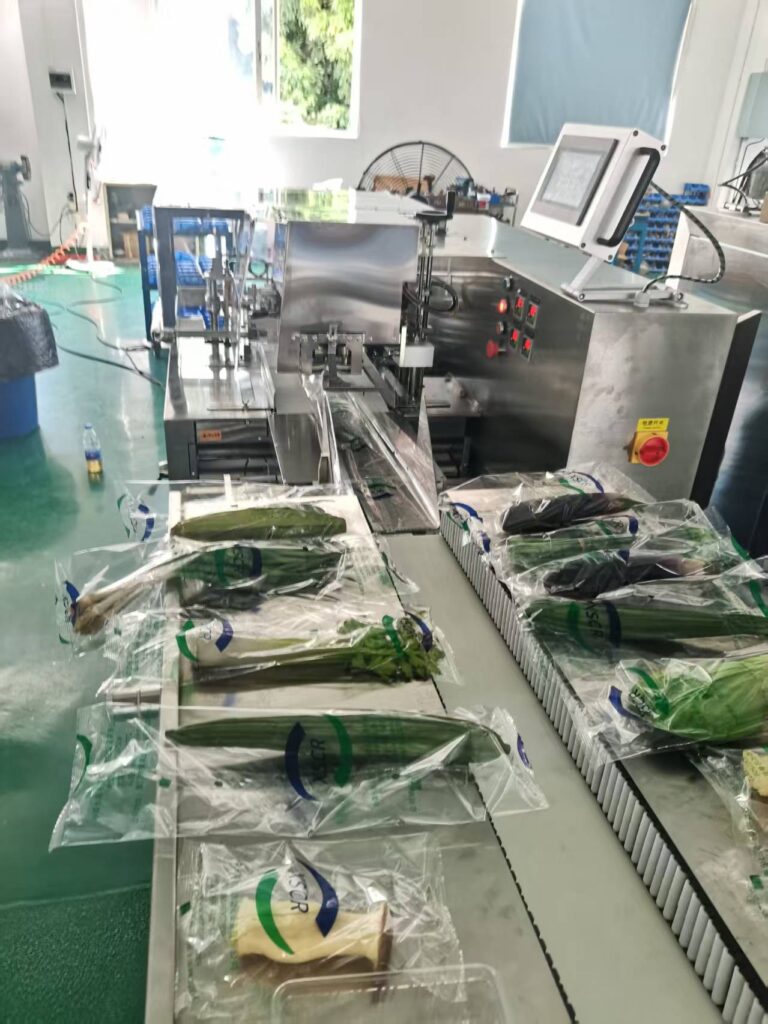
- Vegetable packaging
- Mushroom packaging
- Frozen food packaging
- Chocolate packaging
- Snack packaging
Compared with manual packaging, automatic flow wrapping offers:
- Higher packaging speed
- Consistent sealing quality
- Lower labor cost
- Better product protection
- Improved shelf life
- Professional retail packaging appearance
Food Packaging Industries We Serve
Bakery Packaging
Flow wrapping solutions for bread, taarten, koekjes, biscuits, croissants, and bakery snacks with gentle product handling and high-speed sealing.
Fresh Produce Packaging
Packaging systems for vegetables, komkommers, paddestoelen, lettuce, bladgroenten, and fresh produce with optional MAP packaging support.
Frozen Food Packaging
Reliable packaging solutions for frozen dumplings, frozen snacks, zeevruchten, and ready-to-cook food products.
& Snack Packaging
High-speed flow wrapping machines for chocolate bars, candy, wafers, protein bars, and snack food products.
How Does a Flow Wrapper Work? Understanding the Horizontal Packaging Process
Let’s look at the fundamental principles and key steps involved in how a flow wrapper machine works:
| Key Principle / Stap | Beschrijving | Role in Flow Wrapping Process | Impact on Packaging Efficiency & Productintegriteit |
|---|---|---|---|
| 1. Horizontal Packaging | Products are conveyed and wrapped in a horizontal plane. | Ideal for solid, often self-supporting products that can be transported flat. | Prevents product damage (bijv., verpletteren, tipping); maintains product orientation. |
| 2. Product Feeding | Items are automatically or manually placed onto an infeed conveyor, precisely spaced. | Prepares products for wrapping; ensures consistent spacing for accurate sealing. | High throughput; minimizes film waste; prevents jams due to irregular product flow. |
| 3. Film Unwind & Vormen | A roll of film unwinds, passes over a forming box/collar, and is shaped into a continuous tube around the product. | Creates the basic structure of the “pillow pack” bag. | Adapts to various product sizes with minimal changeover; uses roll stock for efficiency. |
| 4. Vinzegel (Longitudinal Seal) | A heating element or ultrasonic device creates a continuous seal along the underside of the film tube, joining its two open edges. This often resembles a “fin” sticking up. | Permanently closes the long seam of the package. | Ensures product containment; prevents leakage along the length of the package. |
| 5. Cross Seals & Cut-off | Heated jaws move perpendicularly to the product flow, making seals at the front and back of each product, simultaneously cutting the individual bags apart. | Simultaneously seals and separates individual packages. | High-speed production; creates a clean, durable seal at package ends; forms the “pillow pack.” |
| 6. Pillow Pack Format | The resulting package style, characterized by a longitudinal fin seal along its length and transverse seals at both ends, creating a soft, pillow-like shape. | Offers flexibility for product dimensions; visually appealing and stackable. | Efficient material usage; provides good product visibility, branding surface. |
| 7. Automatic Film Wrapping | The entire process of film handling, afdichting, and cutting operates continuously without manual intervention. | Enables high-speed, consistent output. | Reduces labor costs; improves sanitation by minimizing human contact. |
| 8. Continuous Packaging | Products and film move constantly through the machine, with wrapping, afdichting, and cutting actions occurring in an uninterrupted flow. | Maximizes throughput; eliminates start-stop cycles that can reduce efficiency. | Supreme speed and efficiency; ideal for high-volume production. |
| 9. Compatible Packaging Films | The ability to work with various flexible film materials, including OPP, CPP, PE, BOPP, laminated films, and even biodegradable options. | Adapts to diverse product needs (barrier, transparency, branding) and sustainability goals. | Versatility in product protection, presentation, and environmental impact. |
This automation not only drastically increased their speed and reduced labor costs but also provided a much more consistent and hygienic automatic film wrapping solution, allowing them to expand production and meet larger demands. This demonstrated the immense impact of continuous packaging in a real-world scenario.
A flow wrapper machine is fundamentally a horizontal form-fill-seal (HFFS) packaging system, designed for high-speed, continuous wrapping of individual or grouped products. Its operations revolve around several key principles:
Horizontal Packaging: Unlike vertical wrappers, a flow wrapper feeds products horizontally along its length. Products are typically conveyed on an infeed system, often with flights or pushers, that precisely spaces them. This horizontal orientation is ideal for solid, self-supporting items like bakery products, verse producten, banketbakkerij, or single-serve small components that can lie flat during the wrapping process.
Film Feeding and Forming: A roll of flexible packaging film (bijv., OPP, CPP, PE) is mounted on the machine and continuously unwinds. This film then passes over a forming box or forming collar. As the film moves through this component, it is shaped into a continuous tube around the stream of incoming products. This creates the basic “pillow pack” structure.
Vinzegel (Longitudinal Seal): As the film forms into a tube around the products, its two opposing edges meet underneath the product line. A heated rotary or static sealing system then joins these edges together, creating a continuous seal that runs along the entire length of the package. This seal is often called a “fin seal” because of its upright, fin-like appearance before it’s sometimes flattened down. This longitudinal seal ensures the package is securely closed along its length.
Automatic Film Wrapping: The entire sequence—from film unwinding and forming to sealing and cutting—is an automated, continuous process. Sensors detect product presence and position, ensuring that the film is wrapped and sealed accurately around each item without manual intervention. This automation is key to achieving high-speed production rates.
Continuous Packaging: Flow wrappers are renowned for their continuous motion. Products are constantly moving through the machine, and the film is continuously unwinding and being formed. This seamless flow allows for very high throughputs, as there are no stop-start cycles that can slow down production. Packaging, afdichting, and cutting happen in one fluid, synchronized motion.
“Pillow Pack” Format: The end result of this process is typically a “pillow pack” style bag. This package is characterized by the fin seal running along its length on one side (usually the bottom) and two transverse “cross seals” at the ends of each package. These cross seals are made by heated jaws that simultaneously seal the film ends and cut the individual packages apart. The bag’s name comes from its soft, enclosed, pillow-like shape.
By integrating these mechanisms, a flow wrapper machine delivers highly efficient, hygiënisch, and consistent packaging, making it an indispensable tool across numerous industries.
Compatible Packaging Films for Flow Wrappers
common types of packaging films compatible with flow wrapper machines:
| Film Type | Key Properties | Ideal Applications | Benefits for Product & Fabrikant |
|---|---|---|---|
| 1. OPP (Oriented Polypropylene) | Hoge helderheid, transparent, glossy, good moisture barrier, crisp feel, good printability, cost-effective. | Bakery products, banketbakkerij (snoepjes, biscuits), snack foods, stationery, soap. | Excellent product visibility, attractive presentation, economical packaging. |
| 2. CPP (Cast Polypropylene) | Softer, more flexible than OPP, excellent heat-seal strength, good puncture resistance, good moisture barrier. | Brood, gebakjes, verse producten (bijv., tomaten), aggressive-shaped items, frozen foods. | Strong, betrouwbare afdichtingen, provides protection for delicate or irregular products. |
| 3. PE (Polyethylene) | Flexible, stretchable, good moisture barrier, tear-resistant, good cold resistance, can be heat-sealed. | Frozen foods (vegetables, meat), verse producten (bijv., peppers), bulk items, industrial goods. | Durable protection, maintains product integrity in cold conditions, cost-effective. |
| 4. Laminated Films | Multi-layered (bijv., PET/PE, OPP/MET/PE), combining properties for superior barriers (zuurstof, vocht), strength, print quality. | Snack foods (chips), koffie, dry goods, fresh meat, ready meals, moisture-sensitive items. | Extended shelf life, enhanced product protection, premium uitstraling, prevents oxidation/spoilage. |
| 5. BOPP (Biaxially Oriented Polypropylene) | Similar to OPP but stronger, more rigid, better clarity, and improved barrier properties due to biaxial orientation. | Snack foods, verse producten, banketbakkerij, labels. | Superior optical clarity, higher strength, better overall barrier. |
| 6. Biodegradable Film | Made from renewable resources (bijv., PLA, PHA, starch-based) or designed to break down naturally in specific environments. | Organic produce, eco-conscious brands, short shelf-life items where sustainability is key. | Reduces environmental impact, meets consumer demand for sustainable packaging. |
Flow Wrapper vs. Vertical Packaging: A Crucial Comparison
key distinctions between flow wrapper (horizontal) and vertical packaging machines:
| Functie | Flow Wrapper (Horizontal Form-Fill-Seal – HFFS) | Vertical Packaging Machine (Vertical Form-Fill-Seal – VFFS) |
|---|---|---|
| Producttype | Solid, often self-supporting products: Bakery goods (brood, croissants), fresh food (meat trays, vegetables), banketbakkerij (chocoladerepen), hardware, medische apparaten. | Powdered, korrelig, or small, loose piece products: Snacks (chips, zoutjes), koffie, suiker, meel, grains, pasta, frozen vegetables, liquids (with appropriate fillers). |
| Packaging Style | Pillow Pack: Characterized by a longitudinal fin seal along its length and transverse seals at both ends. Can also create gusseted or block bottom bags with additional modules. | Bag/Pouch: Varies from simple pillow bags to stand-up pouches, block bottom bags, or three/four-side seal bags. Forms bags using gravity for filling. |
| Orientation | Horizontal: Products are conveyed, wrapped, and sealed while moving horizontally. | Vertical: Film is formed into a tube, products are dropped vertically into the bag, and then sealed. |
| Snelheid | Typisch High to Very High: Designed for continuous motion; can package hundreds of items per minute. | Medium to High: Speed depends on product type, fill volume, and bag size, but can also be very fast for certain applications. |
| Afdichting | Film is typically formed into a tube from the bottom/side, then seals are created longitudinally (fin seal) and transversely (cross seals) at the ends. | Film is formed into a tube from the top; a vertical seal is made along the back, and horizontal seals are made at the top and bottom of each bag. |
| Product Handling | Gentle handling for many products as they ride on the conveyor; less product drop height. | Product can experience a significant drop height into the bag due to gravity; fillers must be suitable for product type (bijv., multi-head weigher for snacks). |
| Beste voor | Bakkerij, Fresh Food (dienbladen, individual items), Banketbakkerij (bars, multi-packs), Hardware, Medical devices, Soaps. | Snackvoedsel, Coffee, Grains, Sugar, Poeders, Spices, Nuts, Frozen Vegetables, Pet Food. |
| Footprint | Can be longer due to infeed conveyor; often requires more linear space. | More vertical space, but often a smaller horizontal footprint. |
How to Choose the Right Flow Wrapper Machine: A Comprehensive Buyer’s Guide
how a buyer should approach selecting the right flow wrapper machine:
| Selection Criteria | Key Considerations | Why It’s Crucial for Choosing a Flow Wrapper |
|---|---|---|
| 1. Product Size | Dimensions (Length, Width, Height): Provide exact min/max dimensions. Weight: Consider product weight for conveyor and sealing jaw strength. Shape & Delicacy: Is the product rigid, soft, fragile, or irregular? | The machine’s forming box, afdichtende kaken, and infeed conveyor must be designed to accommodate the physical size and properties of your product range. Oversized products won’t fit, while undersized or delicate products might be damaged. The type of forming collar and sealing method can vary greatly based on dimensions and fragility. |
| 2. Packaging Speed | Required Output (Packs per Minute/Hour): How many packages do you need to produce to meet demand? Production Line Integration: Does it need to synchronize with upstream (bijv., ovens, depositors) or downstream equipment (bijv., kartonneren)? | This directly impacts the machine’s model (entry-level, mid-range, high-speed servo-driven), kosten, and overall line efficiency. An undersized machine will create bottlenecks, while an oversized one is an unnecessary expense. Motor types (bijv., servo motors for higher precision and speed vs. mechanical drive) are direct results of this requirement. |
| 3. Film Type | Material Composition: (bijv., OPP, CPP, PE, BOPP, laminates, biologisch afbreekbaar). Film Characteristics: Does it need to be clear, printed, metallic, heat-sealable, cold-sealable, or barrier-enhanced? Film Thickness: What gauge/micron range will be used? | The flow wrapper must be equipped with the correct sealing technology (bijv., continuous heat, crimp heat, ultrasonic, cold seal) for the chosen film. It must also have the appropriate tension controls and film handling mechanisms for the film’s stretch and rigidity. Incorrect film compatibility can lead to poor seals, film scheuren, or machine jams. This also impacts product shelf life and presentation significantly. |
| 4. Product Feeding | Automation Level: Handmatig, halfautomatisch, or fully automatic. Integration Needs: Does it need to connect with an existing conveyor, feeder, robotic arm, or other upstream equipment (bijv., slicers, depositors)? Product Orientation: Will the product be presented correctly to the wrapper? | Efficient and consistent product feeding is vital for maximizing the flow wrapper’s speed and preventing jams. The choice impacts labor costs and overall OEE (Algemene effectiviteit van apparatuur). Fully automatic systems often require complex integration but deliver the highest efficiency. The infeed conveyor design (bijv., flighted, belt, chain) must perfectly suit the product. |
| 5. MAP Requirements (Verpakking met gemodificeerde atmosfeer) | Gas Flushing Capability: Is gas flushing required to extend shelf life or preserve product characteristics (bijv., color for meat)? Gas Mix: What specific gas blend is needed? Residual Oxygen Level: What O2 level must be achieved and maintained? | Implementing MAP requires specialized flow wrappers equipped with gas flushing nozzles, proper sealing jaw designs for hermetic seals, and sometimes a gas analyzer. This adds complexity and cost but is essential for perishable goods where extended shelf life and specific atmospheric conditions are critical. Not all flow wrappers can handle MAP. |
| 6. Tray or Pillow Pack | Product Presentation: Is the product best presented in a rigid tray (bijv., fresh meat, ready meals) or a flexible “pillow pack” (bijv., biscuits, snacks)? Protection Needs: Does the product need the structural support of a tray? | This dictates whether you need a standard flow wrapper (primarily for pillow packs) or a specialized tray wrapping flow wrapper. Tray options often require specific film handling and sealing mechanisms to ensure the film is securely sealed around or to the tray. The choice impacts material costs and shelf presentation significantly. |
| 7. Automatic Feeding System | Level of Automation Desired: From simple conveyors to complex robotic pick-and-place systems. Product Singulation: How will products be individually separated and positioned for wrapping? Buffer Capacity: Is a buffering system needed to handle upstream fluctuations? | Automating the feeding process is critical for achieving high-speed efficiency and reducing labor. It ensures consistent product flow and placement, which directly impacts the wrapper’s performance. The sophistication of the feeding system must match the overall automation goals and product handling requirements. Incorrect feeding can cause jams and production stoppages, negating the benefits of a high-speed wrapper. |
| 8. Machine Construction & Hygiëne | Material of Construction: Stainless steel (SUS304/316) for food-grade environments. Washdown Capabilities: IP rating, open frame design for easy cleaning. Sanitary Design: Minimal crevices, tool-less disassembly for cleaning. | Especially vital for fresh food. Ensures compliance with food safety regulations (HACCP, FDA, CE). Reduces risk of contamination, bacterial growth, and allows for efficient daily cleaning, minimizing downtime. A non-hygienic machine for fresh food is a critical failure point. |
| 9. After-Sales Support & Spares | Local Service Availability: Technicians, reserveonderdelen. Warranty & Training: Coverage, opleiding van operators. | Crucial for minimizing downtime. A high-speed machine is only efficient if it stays running. Accessible support and readily available parts prevent costly, extended disruptions. Proper training ensures operators can handle basic maintenance and troubleshooting. |
Frequently Asked Questions About Flow Wrapper Machines
the most common and critical questions buyers and operators have about flow wrapper machines:
| Question | Answer |
|---|---|
| 1. What products can be packaged with a flow wrapper? | Flow wrappers are ideal for solid, discrete, and often self-supporting products. Dit omvat: – Bakkerij: Brood, rolls, croissants, taarten, koekjes, biscuits – Fresh Food: Individual fruits (apples, bananas), vegetables (peppers, komkommers), meat trays, ready meals, sandwiches – Banketbakkerij: Chocolate bars, candy, multi-packs – Non-Food: Soap, hardwareartikelen, medische apparaten, stationery. |
| 2. What is the difference between flow wrapping and shrink wrapping? | – Flow Wrapping: Uses a continuous roll of film (bijv., OPP, CPP) to create a sealed “pillow pack” bag with a longitudinal fin seal and two end seals. The film does not reduce much in size after sealing. – Shrink Wrapping: Uses a special shrink film (bijv., POF, PVC) that is wrapped loosely around a product and then passed through a heat tunnel. The heat causes the film to tightly shrink and conform to the product’s shape, forming a tight, protective skin. The goal is product conformity, not just enclosure. |
| 3. Can flow wrapper machines support MAP packaging? | Ja, specialized flow wrapper models can support Modified Atmosphere Packaging (KAART). These machines are equipped with gas flushing capabilities that inject a specific gas mixture (bijv., stikstof, CO2) in de verpakking voordat u deze verzegelt, extending the shelf life of perishable products like fresh meat, poultry, and certain produce. This requires hermetic sealing jaws and appropriate barrier films. |
| 4. What film is best for bakery packaging? | For most bakery products, OPP (Oriented Polypropylene) En CPP (Cast Polypropylene) films are very common. – OPP: Offers high clarity, gloss, and a crisp feel, great for product visibility and presentation. – CPP: Provides more flexibility, better heat-seal strength, and good puncture resistance, suitable for softer or more uniquely shaped items. For extended shelf life, especially for cakes or items with high oil content, laminated films with oxygen barriers might be used. |
| 5. How fast can a horizontal flow wrapper run? | The speed of a horizontal flow wrapper varies significantly based on the model, product size, film type, and degree of automation. – Entry-level machines: ~60-120 packs per minute (ppm) – Mid-range: ~120-250 ppm – High-speed servo-driven machines: Can exceed 400 ppm, with some specialized models reaching up to 800+ ppm. |
| 6. Can flow wrappers package vegetables? | Ja, flow wrappers are commonly used to package vegetables. They can handle: – Individual items: Such as cucumbers, peppers, corn on the cob. – Gegroepeerde artikelen: Bunches of carrots or radishes. – Tray-packed vegetables: Where vegetables are placed in a plastic or foam tray, and the entire tray is then flow-wrapped. For some vegetables, films with controlled breathability might be used to manage respiration. |
| 7. What is pillow pack packaging? | A pillow pack is a type of flexible packaging bag characterized by: 1. A longitudinal fin seal running along the length of the package (usually on the bottom or back). 2. Two transverse / cross seals at the opposite ends of the package. The resulting shape is soft and resembles a pillow, hence the name. It’s an economical and efficient way to package a wide range of solid products. |
| 8. Are flow wrapper machines suitable for small businesses? | Ja, absolutely. While flow wrappers are known for high-speed industrial applications, many manufacturers offer compact, affordable, and user-friendly entry-level models designed for small to medium-sized businesses. These machines offer significant benefits over manual packing, including: – Increased efficiency and speed – Improved package consistency and appearance – Enhanced hygiene – Reduced labor costs in the long run. |
| 9. What is a “fin seal”? | A fin seal is the longitudinal seal created on a horizontal flow wrapper. It is formed when the two opposing edges of the packaging film, after being formed into a tube around the product, are brought together and sealed face-to-face. It typically stands upright, resembling a “fin,” though it can sometimes be flattened. It ensures the integrity of the package along its longest dimension. |
| 10. Can flow wrappers handle changes in product size? | Ja, most modern flow wrappers offer quick changeover capabilities. This means operators can adjust the forming box and sealing jaws (often with tool-less adjustments or pre-programmed recipes) to accommodate different product sizes within a certain range. For significant size differences or completely different products, some mechanical adjustments might be needed, but the process is generally designed to be efficient. |
Horizontal Flow Wrapping Machines Application
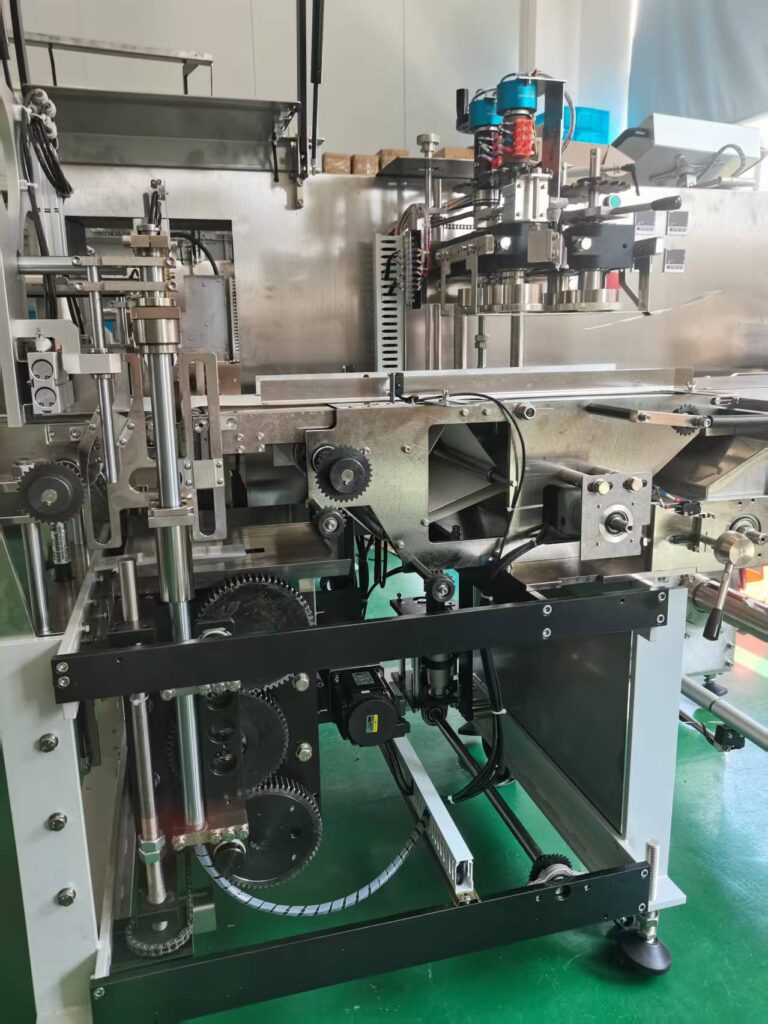
Automatic Horizontal Flow Wrapping Machines Detailed View
Why Choose Our Horizontal Flow Wrapping Machines?
High-Speed Packaging Performance
Our machines support stable high-speed operation for continuous food packaging production.
Servo Motor Control System
Advanced servo technology provides accurate bag length control and precise film positioning.
Intelligent PLC Touchscreen
User-friendly touchscreen interface for easy operation, parameter adjustment, and recipe storage.
Food Grade Machine Construction
Designed for hygienic food production environments with stainless steel contact parts available.
Flexible Packaging Film Compatibility
Compatible with various packaging materials including OPP, CPP, PE, BOPP, laminated film, and biodegradable films.
Optional MAP Packaging System
Modified atmosphere packaging solutions available for fresh produce and shelf-life extension applications.
Custom Packaging Solutions
Customized machine configuration based on product size, speed requirements, packaging style, and factory layout.
Get a Free Packaging Solution
Looking for a reliable horizontal food flow wrapping expert?
Contact our team today for customized packaging machine recommendations, packaging film suggestions, and complete food packaging solutions.