
Flow Pack for Modern Food Packaging
China Flow Wrapper provides automatic horizontal flow wrapping machines designed for bakery, fresh produce, frozen food, kas fes, tea, chocolate, Khoom noj txom ncauj, and retail food packaging industries.
We specialize in high-speed pillow pack packaging systems that improve packaging efficiency, reduce labor costs, enhance product appearance, and extend shelf life through reliable sealing technology and intelligent automation.
Our horizontal flow wrappers support various packaging films, product sizes, and automation requirements, making them ideal for both small production facilities and large-scale food packaging lines.
D?
r, also known as a flow wrapping machine or flow pack machine, is an automatic packaging system that wraps products with flexible film in a continuous horizontal motion.
The machine creates a pillow-style package by feeding products through a forming section, sealing the film around the product, and cutting individual packs automatically.
Horizontal flow wrapping machines are widely used for:
- Bread packaging
- Biscuit packaging
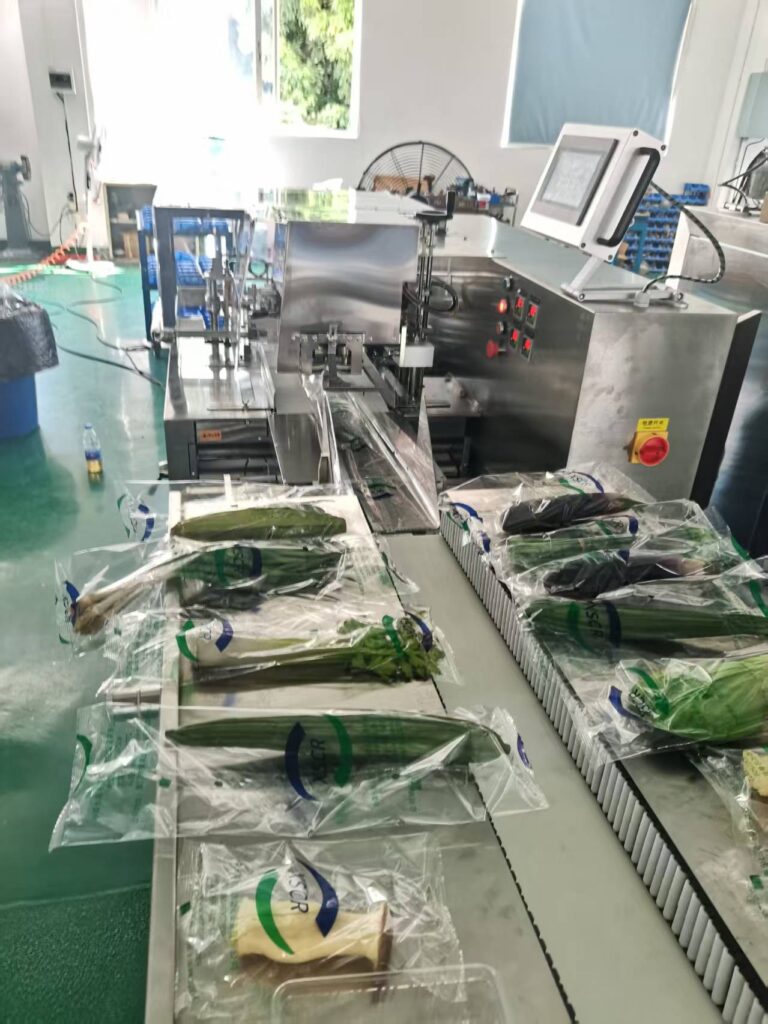
- Vegetable packaging
- Mushroom packaging
- Frozen food packaging
- Chocolate packaging
- Snack packaging
Compared with manual packaging, automatic flow wrapping offers:
- Higher packaging speed
- Consistent sealing quality
- Lower labor cost
- Better product protection
- Improved shelf life
- Professional retail packaging appearance
Food Packaging Industries We Serve
Bakery Packaging
Flow wrapping solutions for bread, s, cookies, biscuits, croissants, and bakery snacks with gentle product handling and high-speed sealing.
Fresh Produce Packaging
Packaging systems for vegetables, dib, mushrooms, lettuce, leafy greens, and fresh produce with optional MAP packaging support.
Frozen Food Packaging
Reliable packaging solutions for frozen dumplings, frozen snacks, Nqaij ntses, and ready-to-cook food products.
& Snack Packaging
High-speed flow wrapping machines for chocolate bars, candy, wafers, protein bars, and snack food products.
How Does a Flow Wrapper Work? Nkag siab txog Cov Txheej Txheem Ntim Kab rov tav
Let’s look at the fundamental principles and key steps involved in how a flow wrapper machine works:
| Key Principle / Step | Piav qhia | Role in Flow Wrapping Process | Impact on Packaging Efficiency & Product Integrity |
|---|---|---|---|
| 1. Horizontal Packaging | Products are conveyed and wrapped in a horizontal plane. | Ideal for solid, often self-supporting products that can be transported flat. | Prevents product damage (piv txwv li, tsoo, tipping); maintains product orientation. |
| 2. Product Feeding | Items are automatically or manually placed onto an infeed conveyor, precisely spaced. | Prepares products for wrapping; ensures consistent spacing for accurate sealing. | High throughput; minimizes film waste; prevents jams due to irregular product flow. |
| 3. Film Unwind & Forming | A roll of film unwinds, passes over a forming box/collar, and is shaped into a continuous tube around the product. | Creates the basic structure of the “pillow pack” bag. | Adapts to various product sizes with minimal changeover; uses roll stock for efficiency. |
| 4. Fin Seal (Longitudinal Seal) | A heating element or ultrasonic device creates a continuous seal along the underside of the film tube, joining its two open edges. This often resembles a “fin” sticking up. | Permanently closes the long seam of the package. | Ensures product containment; prevents leakage along the length of the package. |
| 5. Cross Seals & Cut-off | Heated jaws move perpendicularly to the product flow, making seals at the front and back of each product, simultaneously cutting the individual bags apart. | Tib lub sij hawm foob thiab cais cov pob khoom. | Kev kub ceev ntau lawm; tsim kom huv si, ruaj khov foob ntawm pob xaus; forms the “pillow pack.” |
| 6. Hauv ncoo pob hom ntawv | Lub pob khoom tshwm sim, tus yam ntxwv los ntawm longitudinal fin foob raws nws qhov ntev thiab transverse foob ntawm ob qho kawg, tsim kom muag muag, hauv ncoo zoo li cov duab. | Muab kev hloov pauv rau cov khoom qhov ntev; visually txaus nyiam thiab stackable. | Kev siv khoom siv tau zoo; muab cov khoom lag luam pom zoo, hom nto. |
| 7. Tsis siv neeg zaj duab xis qhwv | Tag nrho cov txheej txheem ntawm kev ua yeeb yaj kiab tuav, sealing, thiab txiav ua haujlwm tsis tu ncua yam tsis muaj kev cuam tshuam ntawm phau ntawv. | Ua kom muaj kev kub ceev, cov zis zoo ib yam. | Txo cov nqi ua haujlwm; txhim kho kev tu cev los ntawm kev txo qis tib neeg kev sib cuag. |
| 8. Ntim Nruam Ntim | Cov khoom lag luam thiab zaj duab xis txav tas li los ntawm lub tshuab, nrog qhwv, sealing, thiab txiav kev ua tshwm sim hauv qhov tsis muaj kev cuam tshuam. | Maximizes throughput; eliminates start-stop cycles that can reduce efficiency. | Supreme speed and efficiency; ideal for high-volume production. |
| 9. Compatible Packaging Films | The ability to work with various flexible film materials, including OPP, CPP, PE, BOPP, laminated films, and even biodegradable options. | Adapts to diverse product needs (barrier, transparency, branding) and sustainability goals. | Versatility in product protection, kev nthuav qhia, thiab cuam tshuam ib puag ncig. |
This automation not only drastically increased their speed and reduced labor costs but also provided a much more consistent and hygienic automatic film wrapping solution, allowing them to expand production and meet larger demands. This demonstrated the immense impact of ntim txuas ntxiv hauv qhov xwm txheej tiag tiag.
Lub tshuab ntim ntim dej ntws yog ib qho tseem ceeb ntawm kab rov tav daim ntawv-sau-foob (HFFS) ntim system, tsim rau kev ntim ceev, ntim txuas ntxiv ntawm cov khoom ib leeg lossis pawg. Nws txoj haujlwm yog ib ncig ntawm ntau lub ntsiab cai tseem ceeb:
Horizontal Packaging: Tsis zoo li cov ntim kab rov tav, ib qho ntim ntim ntws muab cov khoom rau kab rov tav raws nws qhov ntev. Cov khoom feem ntau raug xa mus rau hauv infeed system, feem ntau nrog cov dav hlau lossis pushers, uas muab lawv qhov chaw kom raug. Qhov kev tig kab rov tav no zoo tagnrho rau cov khoom ruaj khov, cov khoom txhawb nqa tus kheej xws li cov khoom ncuav qab zib, fresh produce, khoom qab zib, lossis cov khoom me me ib leeg uas tuaj yeem pw flat thaum ntim.
Kev pub thiab tsim zaj duab xis: Ib lub voj voog ntim khoom yooj yim (piv txwv li, OPP, CPP, PE) tau ntsia rau ntawm lub tshuab thiab txuas ntxiv nthuav tawm. Zaj duab xis no ces dhau ib lub thawv tsim lossis lub nplhaib tsim. Thaum zaj duab xis txav dhau qhov khoom no, it is shaped into a continuous tube around the stream of incoming products. This creates the basic “pillow pack” structure.
Fin Seal (Longitudinal Seal): As the film forms into a tube around the products, its two opposing edges meet underneath the product line. A heated rotary or static sealing system then joins these edges together, creating a continuous seal that runs along the entire length of the package. This seal is often called a “fin seal” because of its upright, fin-like appearance before it’s sometimes flattened down. Qhov no longitudinal foob kom paub tseeb tias lub pob yog ruaj ntseg kaw raws nws ntev.
Tsis siv neeg zaj duab xis qhwv: Tag nrho cov sequence-los ntawm zaj duab xis unwinding thiab tsim mus rau sealing thiab txiav-yog ib tug automated, tas mus li txheej txheem. Sensors nrhiav tau cov khoom muaj thiab txoj hauj lwm, xyuas kom meej tias zaj duab xis yog qhwv thiab kaw kom raug nyob ib ncig ntawm txhua yam khoom tsis muaj kev cuam tshuam ntawm phau ntawv. Qhov kev siv tshuab no yog tus yuam sij rau kev ua tiav cov nqi tsim khoom kub ceev.
Ntim Nruam Ntim: Cov ntaub qhwv ntws muaj npe nrov rau lawv cov lus tsa suab tsis tu ncua. Cov khoom lag luam tas li txav los ntawm lub tshuab, thiab zaj duab xis tsis tu ncua unwinding thiab tsim tawm. Qhov no seamless flow tso cai rau cov khoom siv siab heev, vim tias tsis muaj kev nres-pib voj voog uas tuaj yeem qeeb kev tsim khoom. Ntim, sealing, thiab txiav tshwm sim hauv ib qho kua, synchronized tsab ntawv tsa suab.
“Pillow Pack” Format: The end result of this process is typically a “pillow pack” style bag. o (v) and two transverse “cross seals” at the ends of each package. a. The bag’s name comes from its soft, g, hauv ncoo zoo li cov duab.
By integrating these mechanisms, t, hygienic, s, h.
w
common types of packaging films compatible with flow wrapper machines:
| Film Type | Key Properties | Ideal Applications | Benefits for Product & Chaw tsim tshuaj paus |
|---|---|---|---|
| 1. OPP (Oriented Polypropylene) | High clarity, transparent, glossy, good moisture barrier, crisp feel, good printability, cost-effective. | Bakery products, khoom qab zib (candies, biscuits), snack foods, stationery, soap. | Excellent product visibility, attractive presentation, economical packaging. |
| 2. CPP (Cast Polypropylene) | Softer, more flexible than OPP, excellent heat-seal strength, good puncture resistance, good moisture barrier. | Bread, pastries, fresh produce (piv txwv li, tomatoes), aggressive-shaped items, frozen foods. | Strong, reliable seals, provides protection for delicate or irregular products. |
| 3. PE (Polyethylene) | Flexible, stretchable, good moisture barrier, tear-resistant, good cold resistance, can be heat-sealed. | Frozen foods (vegetables, meat), fresh produce (piv txwv li, peppers), bulk items, industrial goods. | Durable protection, maintains product integrity in cold conditions, cost-effective. |
| 4. Laminated Films | Multi-layered (piv txwv li, PET/PE, OPP/MET/PE), combining properties for superior barriers (oxygen, Noo noo), strength, print quality. | Snack foods (chips), kas fes, dry goods, fresh meat, ready meals, moisture-sensitive items. | Extended shelf life, enhanced product protection, premium look, prevents oxidation/spoilage. |
| 5. BOPP (Biaxially Oriented Polypropylene) | Similar to OPP but stronger, more rigid, better clarity, and improved barrier properties due to biaxial orientation. | Snack foods, fresh produce, khoom qab zib, labels. | Superior optical clarity, higher strength, better overall barrier. |
| 6. Biodegradable Film | Made from renewable resources (piv txwv li, PLA, PHA, starch-based) or designed to break down naturally in specific environments. | Organic produce, eco-conscious brands, short shelf-life items where sustainability is key. | Reduces environmental impact, meets consumer demand for sustainable packaging. |
Flow Wrapper vs. Vertical Packaging: A Crucial Comparison
key distinctions between flow wrapper (horizontal) and vertical packaging machines:
| Feature | Flow Wrapper (v – HFFS) | Vertical Packaging Machine (Vertical Form-Fill-Seal – VFFS) |
|---|---|---|
| Product Type | Solid, feem ntau yog cov khoom uas tuaj yeem txhawb nqa tus kheej: Cov khoom ua ncuav qab zib (ncuav qab zib, croissants), zaub mov tshiab (tais nqaij, vegetables), khoom qab zib (chocolate bar), kho vajtse, cov cuab yeej kho mob. | Hmoov, granular, lossis me me, cov khoom dawb: Cov khoom noj txom ncauj (chips, pretzels), kas fes, Qab zib, hmoov nplej, nplej, pasta, zaub txias, kua dej (nrog cov khoom ntim tsim nyog). |
| Hom ntim | Pob Pillow: Muaj qhov cim ntawm ib qho nplhaib ntev ntawm nws ntev thiab cov nplhaib hla ntawm ob sab. Kuj tuaj yeem tsim cov hnab hauv qab uas muaj gusseted lossis block nrog cov modules ntxiv. | Hnab/Pouch: Muaj ntau yam los ntawm hnab taub hau yooj yim mus rau hnab sawv, hnab hauv qab pob zeb, lossis hnab kaw peb/plaub sab. Tsim hnab siv zog hnyav rau puv. |
| Kev taw qhia | Horizontal: Cov khoom raug nqa, puag, thiab kaw thaum txav kab rov tav. | Vertical: Zaj duab xis tsim ua ib lub raj, cov khoom poob ntsug rau hauv hnab, thiab tom qab ntawd kaw. |
| Ceev | Feem ntau Siab mus rau Siab heev: Tsim rau kev txav mus tas li; tuaj yeem ntim ntau pua yam khoom ib feeb. | Nruab nrab mus rau siab: Ceeb toom nyob ntawm hom khoom, ntim ntim, and bag size, but can also be very fast for certain applications. |
| Sealing | Film is typically formed into a tube from the bottom/side, then seals are created longitudinally (fin seal) and transversely (cross seals) at the ends. | Film is formed into a tube from the top; a vertical seal is made along the back, and horizontal seals are made at the top and bottom of each bag. |
| Product Handling | Gentle handling for many products as they ride on the conveyor; less product drop height. | Product can experience a significant drop height into the bag due to gravity; fillers must be suitable for product type (piv txwv li, multi-head weigher for snacks). |
| Qhov zoo tshaj plaws rau | Bakery, Fresh Food (trays, cov khoom ib leeg), Confectionery (bars, multi-packs), Hardware, Medical devices, Soaps. | Snack Foods, Kas fes, Grains, Sugar, Powders, Spices, Nuts, Frozen Vegetables, Pet Food. |
| Footprint | Can be longer due to infeed conveyor; often requires more linear space. | More vertical space, but often a smaller horizontal footprint. |
How to Choose the Right Flow Wrapper Machine: A Comprehensive Buyer’s Guide
how a buyer should approach selecting the right flow wrapper machine:
| Selection Criteria | Key Considerations | Why It’s Crucial for Choosing a Flow Wrapper |
|---|---|---|
| 1. Product Size | Dimensions (Length, Width, Height): Provide exact min/max dimensions. Weight: Consider product weight for conveyor and sealing jaw strength. Shape & Delicacy: Is the product rigid, soft, fragile, or irregular? | The machine’s forming box, sib khi lub puab tsaig, and infeed conveyor must be designed to accommodate the physical size and properties of your product range. Oversized products won’t fit, thaum cov khoom me me lossis yooj yim puas yuav raug puas tsuaj. Hom kev tsim dab tshos thiab txoj kev sib khi tuaj yeem sib txawv heev raws li qhov ntev thiab tsis yooj yim. |
| 2. Ntim Ceev | Yuav tsum tau tso zis (Pob ib feeb / teev): Muaj pes tsawg pob koj yuav tsum tsim kom tau raws li qhov xav tau? Kev Sib Koom Tes Ntau Lawm: Nws puas yuav tsum synchronize nrog upstream (piv txwv li, qhov cub, depositors) lossis cov khoom siv nqes dej (piv txwv li, cartoning)? | Qhov no cuam tshuam ncaj qha rau qauv tshuab (nkag-theem, nruab nrab-ntau, high-ceev servo-tsav), nqi, thiab tag nrho cov kab efficiency. Ib tug undersized tshuab yuav tsim bottlenecks, thaum ib tug oversized ib tug yog ib tug tsis tsim nyog siv nyiaj. Tsav hom (piv txwv li, servo motors rau siab dua precision thiab ceev vs. mechanical tsav) yog ncaj qha tshwm sim ntawm qhov yuav tsum tau ua. |
| 3. Film Type | Khoom muaj pes tsawg leeg: (piv txwv li, OPP, CPP, PE, BOPP, laminates, biodegradable). Zaj duab xis yam ntxwv: Nws puas yuav tsum tau meej, luam tawm, metallic, kub-sealable, txias-sealable, los yog barrier-enhanced? Zaj duab xis Thickness: Yuav siv dab tsi gauge / micron ntau yam? | Cov txheej txheem ntim dej ntws yuav tsum muaj cov thev naus laus zis kaw kom raug (piv txwv li, kub txuas ntxiv, kub crimp, ultrasonic, kaw txias) rau zaj duab xis xaiv. Nws yuav tsum muaj kev tswj kev tension thiab kev tuav zaj duab xis kom phim muaj kev nthuav thiab ruaj khov. Kev sib haum xeeb zaj duab xis tsis raug yuav ua rau kaw tsis zoo, zaj duab xis tearing, lossis tshuab khiav tsis tau. Qhov no kuj cuam tshuam rau lub neej thiab kev nthuav qhia ntawm cov khoom loj. |
| 4. Product Feeding | Qib tsis siv neeg: Phau ntawv qhia, semi-automatic, lossis tag nrho tsis siv neeg. Kev xav tau kev sib txuas: Puas yuav tsum txuas nrog ib qho conveyor uas twb muaj lawm, feeder, txhais tes robotic, lossis lwm cov cuab yeej ua ntej (piv txwv li, slicers, depositors)? Kev taw qhia khoom: Cov khoom puas yuav raug nthuav qhia kom raug rau tus neeg npog? | Kev pub khoom zoo thiab ruaj khov yog qhov tseem ceeb rau kev nrawm tshaj plaws ntawm flow wrapper thiab tiv thaiv kev thaiv. Kev xaiv cuam tshuam rau tus nqi ua haujlwm thiab tag nrho OEE (Kev Ua Haujlwm Tag Nrho ntawm Cov Cuab Yeej). Cov txheej txheem tag nrho tsis siv neeg feem ntau xav tau kev sib xyaw nyuaj tab sis muab kev ua tau zoo tshaj plaws. Kev tsim conveyor nkag (piv txwv li, flighted, belt, chain) yuav tsum haum zoo kawg nkaus rau cov khoom. |
| 5. MAP Cov Kev Cai (Hloov Huab Cua Ntim) | Gas Flushing Capability: Puav leej puas yuav tsum tau siv gas flushing los nce lub neej khaws cia lossis khaws cov yam ntxwv khoom (piv txwv li, xim rau nqaij)? Gas Mix: Yuav tsum muaj pa sib xyaw twg tshwj xeeb? Residual Oxygen Level: Yuav tsum tau ua thiab tswj O2 qib twg? | Kev siv MAP yuav tsum muaj cov txheej txheem ntim dej tshwj xeeb nrog cov nozzles ntxuav pa, cov qauv sealing jaw tsim nyog rau hermetic seals, thiab qee zaum muaj gas analyzer. This adds complexity and cost but is essential for perishable goods where extended shelf life and specific atmospheric conditions are critical. Not all flow wrappers can handle MAP. |
| 6. Tray or Pillow Pack | Product Presentation: Is the product best presented in a rigid tray (piv txwv li, fresh meat, ready meals) or a flexible “pillow pack” (piv txwv li, biscuits, snacks)? Protection Needs: Does the product need the structural support of a tray? | This dictates whether you need a standard flow wrapper (primarily for pillow packs) or a specialized tray wrapping flow wrapper. Tray options often require specific film handling and sealing mechanisms to ensure the film is securely sealed around or to the tray. The choice impacts material costs and shelf presentation significantly. |
| 7. Automatic Feeding System | Level of Automation Desired: From simple conveyors to complex robotic pick-and-place systems. Product Singulation: How will products be individually separated and positioned for wrapping? Buffer Capacity: Is a buffering system needed to handle upstream fluctuations? | Automating the feeding process is critical for achieving high-speed efficiency and reducing labor. It ensures consistent product flow and placement, which directly impacts the wrapper’s performance. The sophistication of the feeding system must match the overall automation goals and product handling requirements. Incorrect feeding can cause jams and production stoppages, negating the benefits of a high-speed wrapper. |
| 8. Machine Construction & Kev nyiam huv | Material of Construction: Stainless steel (SUS304/316) for food-grade environments. Washdown Capabilities: IP rating, open frame design for easy cleaning. Sanitary Design: Minimal crevices, tool-less disassembly for cleaning. | Especially vital for fresh food. Ensures compliance with food safety regulations (HACCP, FDA, CE). Reduces risk of contamination, bacterial growth, and allows for efficient daily cleaning, minimizing downtime. A non-hygienic machine for fresh food is a critical failure point. |
| 9. After-Sales Support & Spares | Local Service Availability: Technicians, cov khoom seem. Warranty & Training: Coverage, kev cob qhia neeg teb xov tooj. | Crucial for minimizing downtime. A high-speed machine is only efficient if it stays running. Accessible support and readily available parts prevent costly, extended disruptions. Proper training ensures operators can handle basic maintenance and troubleshooting. |
Nquag Nug Txog Flow Wrapper Tshuab
the most common and critical questions buyers and operators have about flow wrapper machines:
| Question | Answer |
|---|---|
| 1. What products can be packaged with a flow wrapper? | Flow wrappers are ideal for solid, discrete, and often self-supporting products. This includes: – Bakery: Bread, rolls, croissants, s, cookies, biscuits – Fresh Food: Individual fruits (apples, bananas), vegetables (peppers, dib), tais nqaij, ready meals, sandwiches – Confectionery: Chocolate bars, candy, multi-packs – Non-Food: Soap, hardware items, cov cuab yeej kho mob, stationery. |
| 2. What is the difference between flow wrapping and shrink wrapping? | – Flow Wrapping: Uses a continuous roll of film (piv txwv li, OPP, CPP) to create a sealed “pillow pack” bag with a longitudinal fin seal and two end seals. The film does not reduce much in size after sealing. – Shrink Wrapping: Uses a special shrink film (piv txwv li, POF, PVC) that is wrapped loosely around a product and then passed through a heat tunnel. The heat causes the film to tightly shrink and conform to the product’s shape, forming a tight, protective skin. The goal is product conformity, not just enclosure. |
| 3. Can flow wrapper machines support MAP packaging? | Yog, specialized flow wrapper models can support Modified Atmosphere Packaging (MAP). These machines are equipped with gas flushing capabilities that inject a specific gas mixture (piv txwv li, nitrogen, CO2) into the package before sealing, extending the shelf life of perishable products like fresh meat, nqaij qaib, and certain produce. This requires hermetic sealing jaws and appropriate barrier films. |
| 4. What film is best for bakery packaging? | For most bakery products, OPP (Oriented Polypropylene) thiab CPP (Cast Polypropylene) films are very common. – OPP: Offers high clarity, gloss, and a crisp feel, great for product visibility and presentation. – CPP: Provides more flexibility, better heat-seal strength, and good puncture resistance, suitable for softer or more uniquely shaped items. For extended shelf life, especially for cakes or items with high oil content, laminated films with oxygen barriers might be used. |
| 5. How fast can a horizontal flow wrapper run? | The speed of a horizontal flow wrapper varies significantly based on the model, product size, film type, and degree of automation. – Entry-level machines: ~60-120 packs per minute (ppm) – Nruab nrab-ntau yam: ~120-250 ppm – High-speed servo-driven machines: Can exceed 400 ppm, with some specialized models reaching up to 800+ ppm. |
| 6. Can flow wrappers package vegetables? | Yog, flow wrappers are commonly used to package vegetables. They can handle: – Individual items: Such as cucumbers, peppers, corn on the cob. – Cov khoom sib sau ua ke: Bunches of carrots or radishes. – Tray-packed vegetables: Where vegetables are placed in a plastic or foam tray, and the entire tray is then flow-wrapped. For some vegetables, films with controlled breathability might be used to manage respiration. |
| 7. What is pillow pack packaging? | A pillow pack is a type of flexible packaging bag characterized by: 1. A longitudinal fin seal running along the length of the package (usually on the bottom or back). 2. Two transverse / cross seals at the opposite ends of the package. Cov duab tshwm sim yog mos muag thiab zoo li hauv ncoo, yog li lub npe. It’s an economical and efficient way to package a wide range of solid products. |
| 8. Yog cov tshuab ntws qhwv tsim nyog rau cov lag luam me? | Yog, kiag li. Thaum cov ntaub qhwv ntws paub txog kev kub ceev kev lag luam, ntau lub tuam ntxhab muaj kev cog lus cog tseg, pheej yig, thiab cov neeg siv tus phooj ywg nkag mus rau cov qauv tsim rau cov lag luam me thiab nruab nrab. Cov cav tov no muaj cov txiaj ntsig zoo dua li phau ntawv ntim, suav nrog: – Ua kom muaj txiaj ntsig zoo thiab nrawm – Txhim kho pob zoo sib xws thiab tsos – Txhim kho kev nyiam lug – Txo cov nqi zog nyob rau hauv lub sijhawm ntev. |
| 9. What is a “fin seal”? | A fin seal yog qhov ntev foob tsim nyob rau ntawm kab rov tav ntws wrapper. Nws tau tsim thaum ob lub npoo tawm tsam ntawm cov yeeb yaj kiab ntim, tom qab tau tsim rau hauv lub raj nyob ib ncig ntawm cov khoom, are brought together and sealed face-to-face. It typically stands upright, resembling a “fin,” though it can sometimes be flattened. It ensures the integrity of the package along its longest dimension. |
| 10. Can flow wrappers handle changes in product size? | Yog, most modern flow wrappers offer quick changeover capabilities. This means operators can adjust the forming box and sealing jaws (often with tool-less adjustments or pre-programmed recipes) to accommodate different product sizes within a certain range. For significant size differences or completely different products, some mechanical adjustments might be needed, but the process is generally designed to be efficient. |
Horizontal Flow Wrapping Machines Application
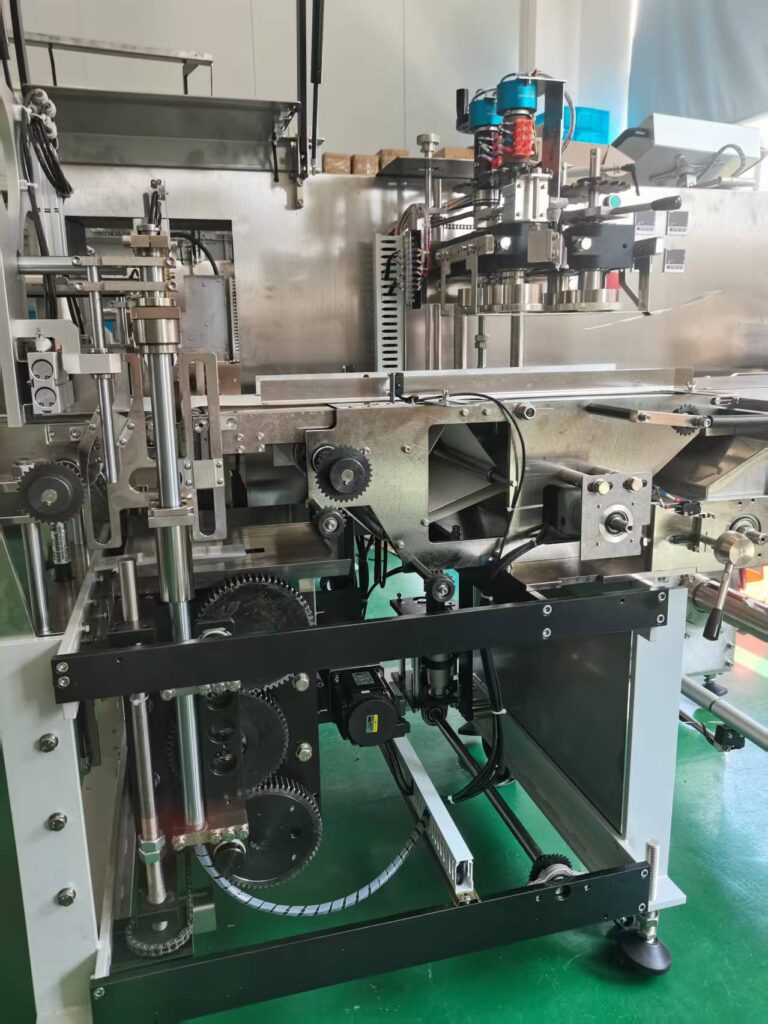
Automatic Horizontal Flow Wrapping Machines Detailed View
Why Choose Our Horizontal Flow Wrapping Machines?
High-Speed Packaging Performance
Our machines support stable high-speed operation for continuous food packaging production.
Servo Motor Control System
Advanced servo technology provides accurate bag length control and precise film positioning.
Intelligent PLC Touchscreen
User-friendly touchscreen interface for easy operation, parameter adjustment, and recipe storage.
Food Grade Machine Construction
Designed for hygienic food production environments with stainless steel contact parts available.
Flexible Packaging Film Compatibility
Compatible with various packaging materials including OPP, CPP, PE, BOPP, laminated film, and biodegradable films.
Optional MAP Packaging System
Cov kev daws teeb meem ntim huab cua hloov kho muaj rau cov khoom tshiab thiab kev nce lub neej cia.
Kev daws teeb meem ntim khoom raws li kev cai
Kev teeb tsa tshuab raws li qhov loj ntawm cov khoom, kev xav tau ceev, ntim style, thiab kev teeb tsa hauv hoobkas.
Tau txais kev daws teeb meem ntim dawb
Nrhiav tus kws tshaj lij ntim zaub mov ntws kab rov tav uas ntseeg tau?
Hu rau peb pab pawg hnub no rau kev pom zoo tshuab ntim khoom raws li kev cai, kev pom zoo txog zaj duab xis ntim khoom, thiab kev daws teeb meem ntim khoom noj tiav.